What to Do in Yosemite at Night: 10 Things to Do After Dark

During the day, guests at Evergreen Lodge and Rush Creek Lodge have access to hiking trails, wellness spas, spacious play areas, bike and equipment rentals, hot tubs, and saltwater pools. But to round out your Yosemite experience, you’ll also need to know what to do in Yosemite at night. From s’mores by the fire to once-in-a-lifetime stargazing, craft beer tastings, and live entertainment, there are plenty of evening activities to help you enjoy your stay in Yosemite.

Stargazing
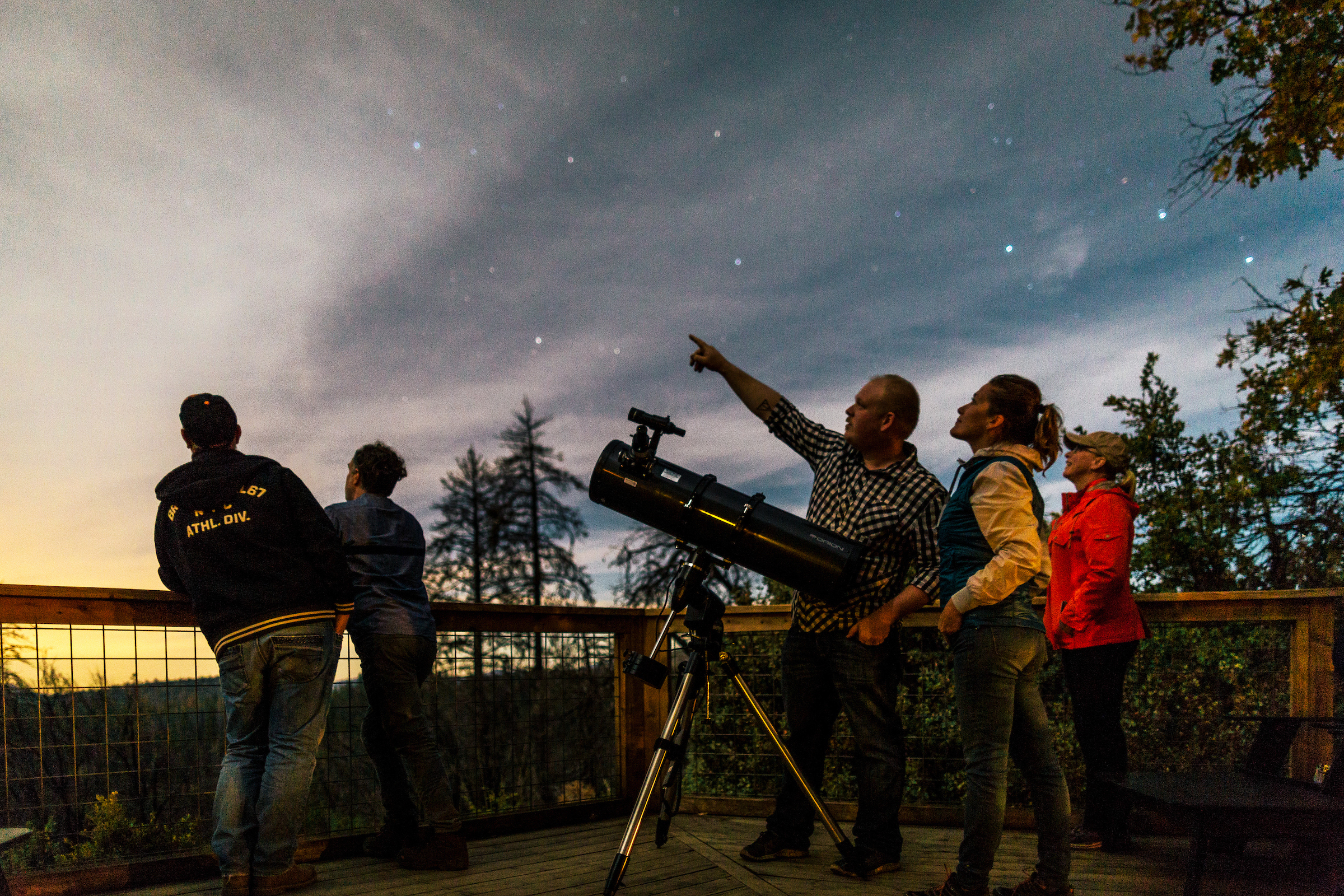
Firefall Ranch Stargazing (Kim Carroll Photography)

After you watch a spectacular sunset over the Sierra Nevada Mountains, take in the glorious, clear night sky over Yosemite. Reserve a spot for yourself and your family or friends for evening stargazing at Evergreen or Rush Creek Lodge, each with its own high-powered telescope.

Experience the night sky like never before, as the absence of light pollution allows for the full range of stars, planets, and galaxies to illuminate the sky. You’ll be close enough to nature’s light show to observe stars, planets, constellations, and glimmering galaxies while listening to fun facts and learning about the mythology of the Yosemite sky.

Painting Party at Rush Creek Lodge

Fun for kids and adults, an evening Painting Party at Rush Creek Lodge lets you unleash your inner Picasso under the guidance of a local artist. You’ll go step-by-step through the process of painting an iconic Yosemite view, and you’ll get to take your creation home as a souvenir.

Glass Blowing at Rush Creek Lodge  

For a memorable experience, book a glass blowing class at night while you’re in Yosemite. Our expert glassblower will guide you through the basics of working with hot glass as you create your very own piece of glass art. Learn the ins and outs of a hot shop, fundamentals of glass blowing, and how to work with the necessary tools for creating blown glass art.

Booking Services at the Spa at The Lodge

Unwind in the gentle calm of night at the Spa at Guest Lodge at Rush Creek. Open until 9 p.m. during winter and 10 p.m. during spring and summer, the Spa offers a variety of guest experiences to make your night in Yosemite unforgettable. Enjoy the serenity of the Sensory Room or wash away your cares in the Warm Waterfall Coves. The Spa also offers dinner and cocktails, so you can make a complete evening of your relaxation vacation.

California Craft Beer Tasting

For guests 21 and older, reserve one night at Yosemite for a sampling of Golden State craft brews. Spend a tasty evening hour at Evergreen Lodge working your way through a flight of handcrafted favorites from some of the best brewmasters in California. Our California Craft Beer Tasting is available on Thursday and Friday evenings in the Rec Center.

Making S’mores Around the Fire
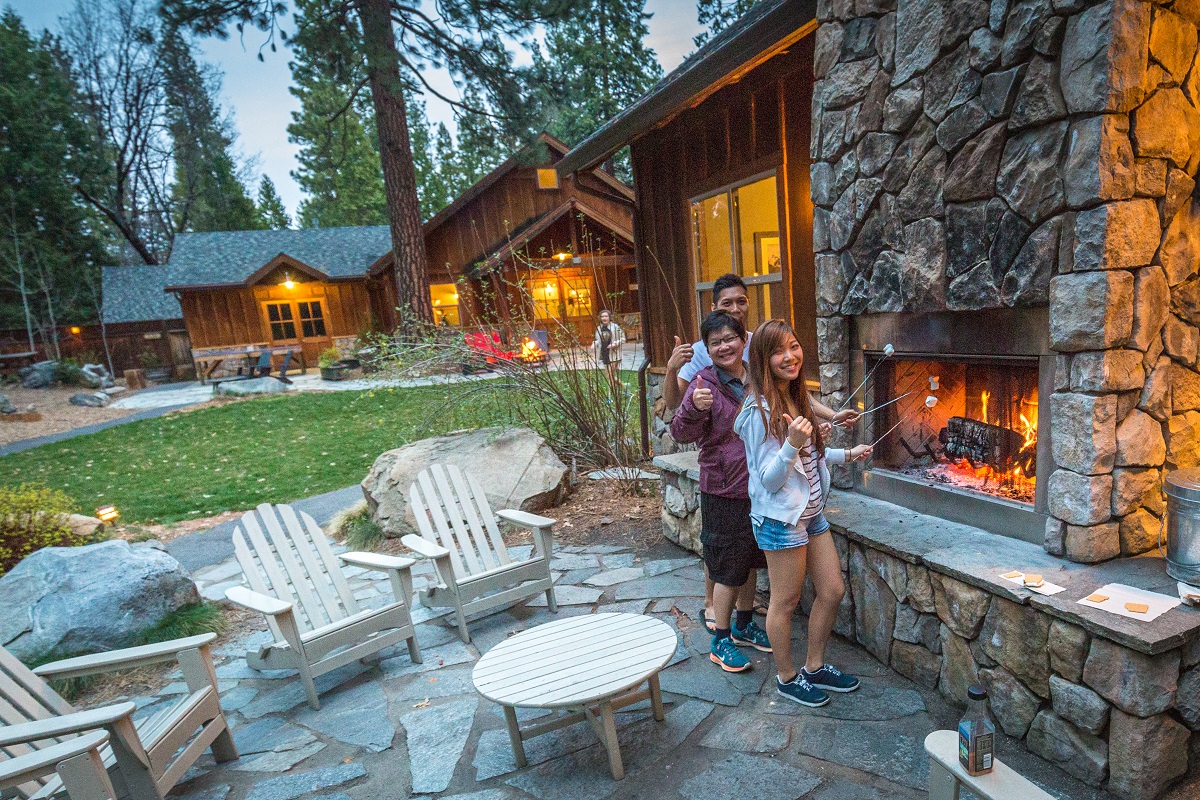
Firefall Ranch Nightly S'mores (Kim Carroll)

Pulling up a chair around the firepits at Rush Creek and Evergreen Lodges for a gooey round of s’mores-making tops the list of what to do in Yosemite at night. The firepits at both Rush Creek’s and Evergreen’s main lodges ignite nightly for s’mores, so you’ll have ample opportunities to concoct this traditional campfire treat.

Enjoying Live Local Music

While Yosemite at night is full of natural wonders, our stage at Evergreen Lodge also features other local wonders you’ll want to check out. Enjoy lively local music in the evenings as well as up-and-coming bands on tour. Since variety is the spice of life, we make sure to include all kinds of music in our lineup at the Tavern. You might find a bluegrass quartet or a sing-along cover band belting out your favorite radio hits. No matter who’s playing, they’ll be there to give you a fun night out at Yosemite.

Partaking in Themed Nights at the Tavern

Unwind after dinner and sunset at the Tavern at Evergreen Lodge. This hometown hub mixes history, scenery, and camaraderie for an unforgettable night in Yosemite. Rangers, hikers, and climbers stop in for a beer, and you’ll often find live local music acts putting on a lively show. Themed nights, like the popular Speakeasy Night, are part of the Tavern experience and add to the fun. Late night at the Tavern at Rush Creek Lodge also offers plenty of things to do. Watch the big game on the big screen televisions, step to the mic for karaoke, or relish the options of distinctive wines while choosing noshes from the late-night menu.

Night Hiking and More With Yosemite National Park Rangers

If you want to do something at night in Yosemite National Park, check their list of evening programs offered by rangers and interpretive naturalist guides. Night hikes, bus tours, cultural programs, and seasonal events are usually available depending on the time of year. Also explore tours available through our Lodges, or visit our Recreation Desk to get expert advice on planning your night hike in Yosemite.

Looking for Moonbows

Visible only during spring and early summer, the elusive lunar rainbows, or “moonbows,” at Yosemite National Park are a prized sighting for anyone fortunate enough to catch one. Moonbows occur at Yosemite Falls, Bridalveil Falls, and Glacier Point when the moonlight hits the waterfall mist at just the right angle. Visit the Recreation Desks at our Lodges to find out more information about planning a moonbow sighting.

Book your stay at our Yosemite hotels for the best amenities and accommodations in Yosemite. Now that you know what to do at night, be sure to include these activities and adventures on your itinerary. As always, we’ll be on hand at the Recreation Desk to assist you in planning any nighttime or daytime excursion or event.

FAQs About What to Do in Yosemite at Night

What is there to do in Yosemite at night?

From stargazing at Evergreen Lodge and Rush Creek Lodge to night hikes and moonbow sightings, Yosemite is well equipped for travelers looking for things to do after sunset.

Can you drive through Yosemite at night?

Yes. Because Yosemite National Park is open 24 hours a day, travelers can visit the park any time of day, weather permitting.

Can you see the Milky Way from Yosemite Valley?

The Milky Way is viewable from Yosemite with the naked eye. However, if you bring your own telescope or astronomy binoculars, you’ll get to see many other astronomical wonders like planets and star clusters.

Where is the best place to stargaze in Yosemite Valley?

Rush Creek Lodge and Evergreen Lodge near Yosemite National Park both offer stargazing experiences. Both experiences include a 12″ aperture Dobsonian telescope and is a fantastic educational and astronomy experience for all ages.
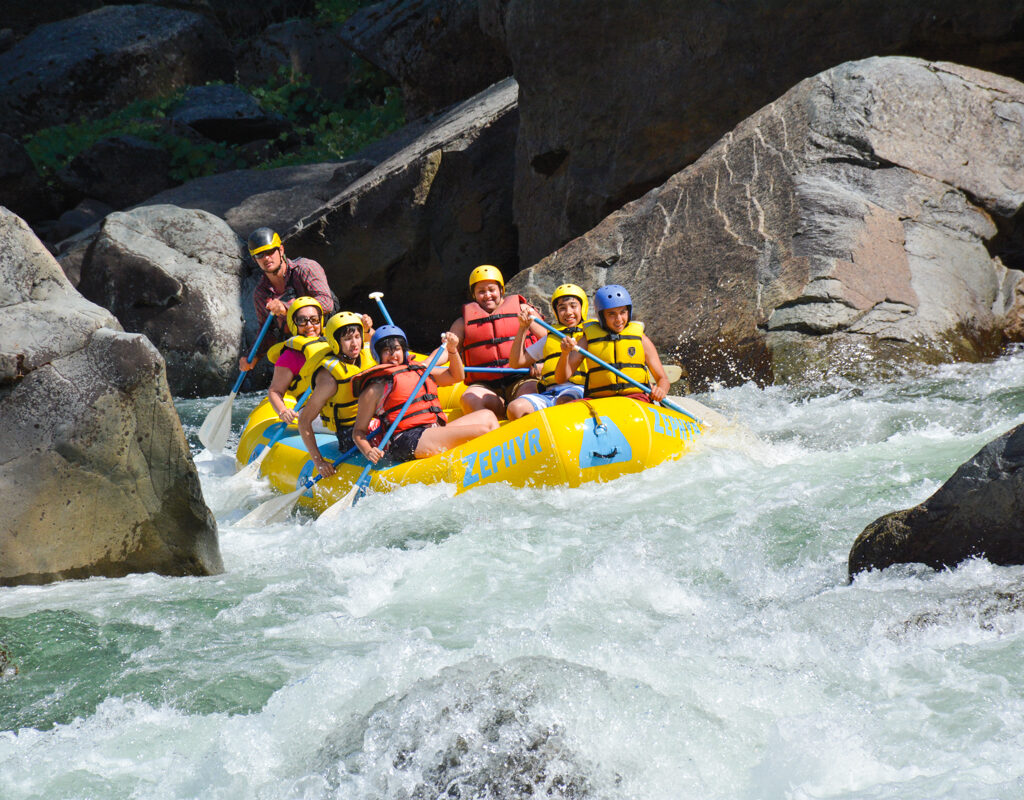
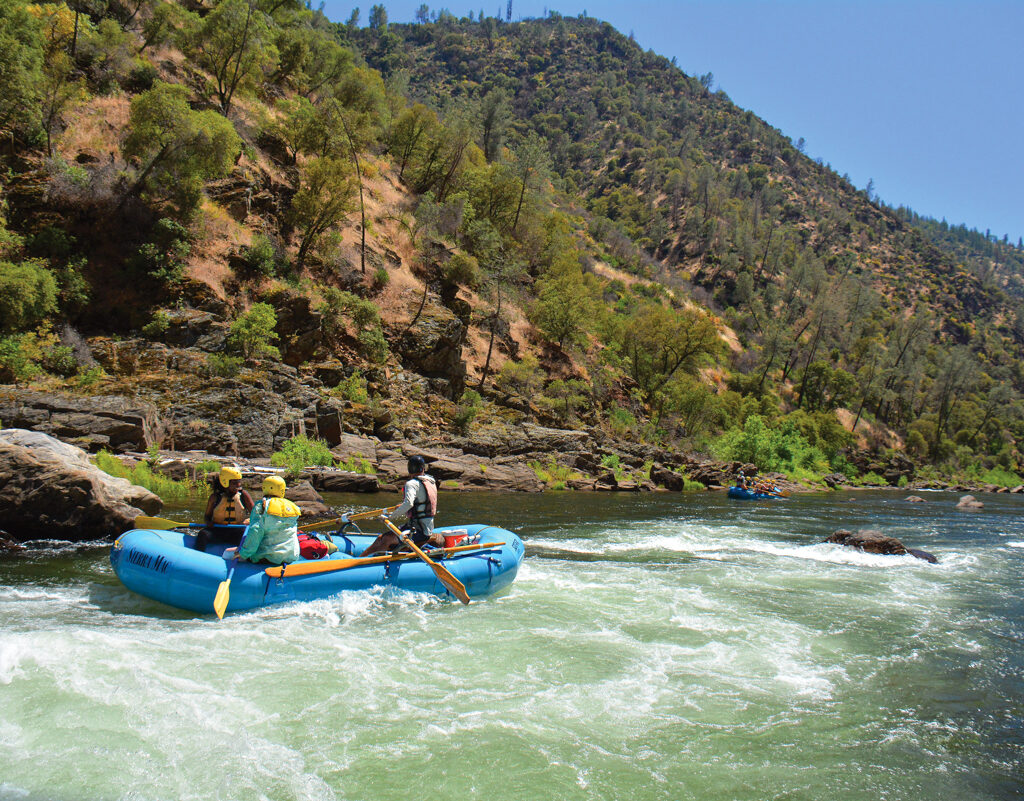
Rafting In Yosemite National Park

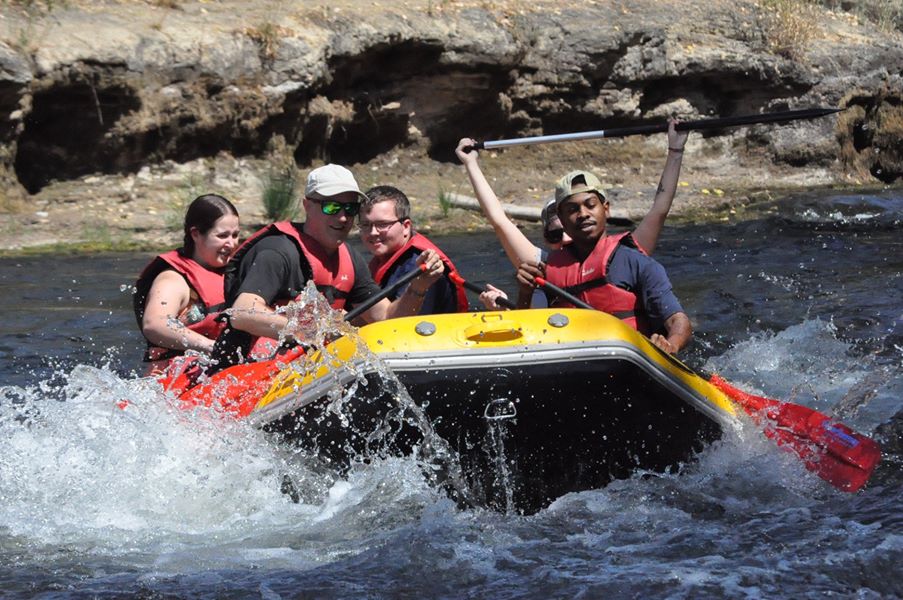
Whitewater rafting in Yosemite National Park is one of the many adventures you will want to add to your itinerary. Spring into early summer is the best time of year to enjoy rafting in the Sierra Nevada as the snowfall melts causing the waterfalls and rivers to flow full, strong and fast. Rafting is still possible mid-summer to early fall on damn-controlled rivers. 

Best Whitewater Rafting In Yosemite

Two of the most popular rivers for rafting in California are the Merced and Tuolumne Rivers. Both rivers are part of the National Wild & Scenic River System for their “outstanding natural, cultural and recreational values.” Known for their superb long rapids, steep drops, narrow chutes and technical reversals, The Merced and Tuolumne Rivers make for premier whitewater rafting trips.

Merced River White Water Rafting

Merced River Rafting

The Merced River totals over 122 miles through the Sierra Nevada.  This impressive river starts in Yosemite’s pristine High Country, explodes through the iconic Nevada and Vernal Falls, then leisurely winds through Yosemite Valley and continues outside of the Park where it picks up speed and transforms into a rafting adventure. 

The 16-mile stretch of whitewater rapids lies between Red Bud and Bagby Reservoir. These Class III-IV rapids are fiercest from April to May as the snowfall first melts. Their intensity lessens as the summer progresses, and rafting on the Merced typically ends around mid-July or August. 

Tuolumne White Water Rafting

Tuolumne River Rafting

The Tuolumne River flows 83 miles through Yosemite National Park and beyond with many smaller rivers branching off. In the middle lies the Hetch Hetchy Reservoir and O’Shaughnessy Dam, allowing for a rafting season of April to October. The 18-mile stretch of rapids on the Tuolumne River ranges from Class III to V+ with the more intense rapids found on the Upper Tuolumne near Cherry Creek. After Meral’s Pool, the rapids stay at a IV or below. 

The main stretch of the Tuolumne River is best known for its wild and scenic wonder with only a few remote trails found along its path. Most of the river remains untouched by roads and has abundant wildlife including bobcats and bald eagles.

Yosemite Rafting Trips

For those looking to enjoy a leisurely float versus an intense rafting adventure, The Curry Village Recreation Center offers raft, inner-tube, paddle and life jacket rentals. While the waters are high during the spring, you can take advantage of a relaxing exploration of the Valley by taking a leisurely paddle down the 3-mile stretch of the Merced River that runs through Yosemite Valley. 

Raft rentals start at $30.50 per person and include paddles, personal flotation devices and a shuttle ride back to Curry Village. The park permits you to use your own raft or inner-tube along this stretch of river and purchase a shuttle ticket for $5 per person. 

Many outfitters in California offer whitewater rafting adventures in and around Yosemite National Park. Three of the best locally-owned companies are Sierra Mac, Whitewater Excitement and Zephyr. For ease of booking your full vacation in one place, check the Rush Creek Lodge & Evergreen Lodge explorations pages to book your rafting adventures then jump right over to the Stay pages to book your Yosemite cabin with the best rates and service available.  

Youth Whitewater Rafting Stanislaus River

Sierra Mac River Trips

Sierra Mac was founded in 1965. Today, they offer guided rafting tours plus fly-fishing trips, mountain-climbing classes and Yosemite hiking tours. Owner Marty McDowell is best known for his pioneering of the Upper Tuolumne River rapids in 1973, still known today as the most challenging whitewater in the US that is commercially run.

Sierra Mac operates only on rivers that flow from within Yosemite and requires all participants to attend a training seminar before their rafting trip. All of their rafting trips include expert guides, state-of-the-art self-bailing rafts (originally designed by McDowell in 1972) and professional photographs throughout your adventure. Here are the four Yosemite rafting trips offered by Sierra Mac:

1| Merced River Rafting Trips

  • Half-day Rafting Trip: 11 miles 
  • Full-day Rafting Trip: 16 miles 
  • Class III-IV rapids
  • Meeting Place: off Hwy 140 in Midpines, CA
  • Minimum Age: 7-years-old during summer & 10-years-old during spring
  • Pricing starts at $104 per person

2| Cherry Creek/Upper Tuolumne Rafting Trips 

  • Full-day Rafting Trip: 9 miles 
  • Class IV-V+ rapids 
  • Meeting Place: off Hwy 120 in Groveland, CA
  • Minimum Age: 15-years-old
  • Pricing starts at $399 per person

3| Main Tuolumne River Rafting Trip* 

  • 1, 2 or 3-Day Rafting Trip: 18 miles 
  • Class III-IV+ Rapids
  • Meeting Place: off Hwy 120 in Groveland, CA
  • Minimum Age: 10-years-old
  • Pricing starts at $349 per person

4| Combination Rafting Trips*

  • 2 or 3-Day Rafting Trip: 27 miles 
  • Class III-V+ Rapids
  • Meeting Place: off Hwy 120 in Groveland, CA
  • Minimum Age: 15-years-old
  • Pricing starts at $829 per person

*For all overnight trips with Sierra Mac, you will enjoy all of your meals prepared by staff, scenic riverside campsites and time for exploration of the surrounding canyon, creeks and swimming holes. Tent and sleeping bag rentals are available.  

Whitewater Excitement 

Whitewater Excitement opened in 1978 and offers beginner, intermediate and advanced rafting adventures. They tour the Merced River plus the multiple stretches of the American River located north of Yosemite near Sacramento. 

Whitewater Excitement’s California rafting adventures include top-of-the-line equipment, smaller groups for more personal attention, cabin tents (for those who prefer to glam-p instead of camp), experienced guides and professional photographs captured during your Yosemite rafting experience. Here is the Yosemite rafting trip offered by Whitewater Excitement:

1| Merced River Rafting Trip

  • 1-Day Rafting Trip: 16 miles 
  • Class III-IV rapids
  • Meeting Place: off Hwy 140 in Midpines, CA 
  • Minimum Age: 14-years-old
  • Pricing starts at $165 per adult, $155 per youth

Zephyr Whitewater Expeditions 

Zephyr was established in 1973 and boasts to be the largest rafting outfitter in the Yosemite region on the Merced and Tuolumne Rivers. They are also one of only 3 outfitters permitted to operate on the Kings River near Sequoia National Park, south of Yosemite. They are also operational on the American River in the northern Sierra Nevada. 

Zephyr Whitewater Expeditions uses state-of-the-art self-bailing rafts and gear, provides professional photographs of your rafting adventure and serves the best “river food” around. During a multi-day rafting trip, expect meals like French toast, taco salads, smoked salmon, Tri-tips caesar salads, lemon poppyseed cake and more. Here are the three Yosemite rafting trips offered by Zephyr: 

1| Tuolumne River Rafting Trip 

  • 1, 2 or 3-Day Rafting Trip: 18 miles 
  • Class III-IV+ Rapids
  • Meeting Place: off Hwy 120 in Groveland, CA
  • Minimum Age: 12-16-years-old (depending on swimming ability and water levels)
  • Pricing starts at $319 per person

2| Merced River Rafting Trip

  • Half-day Rafting Trip: 11 miles 
  • Full-day Rafting Trip: 16 miles 
  • Class III-IV rapids
  • Meeting Place: off Hwy 140 in Midpines, CA 
  • Minimum Age: 7-9-years-old (depending on swimming ability and water levels)
  • Pricing starts at $114 per person

3| Yosemite Special (Merced & Tuolumne River Rafting Trips)

  • 3 or 4-Day Rafting Trip: 16 miles of Merced River + 18 miles of Tuolumne River
  • Class III-IV+ Rapids 
  • Raft the Merced River, enjoy 1-2 exploring Yosemite National Park, then raft the Tuolumne River
  • Pricing combines the 2 rafting adventures with a 10% discount

What To Bring For Rafting In Yosemite?

To aid you in preparing for a rafting trip in Yosemite, we have created a basic list of essentials. Depending on when you are planning to take your Yosemite rafting trip, we also have a cold-weather list of extras to consider.

Warm-Weather Yosemite Rafting List:

  • Lightweight or quick-drying clothes*  
  • Swimsuit or non-bulky swimwear  
  • Sneakers or other closed-toe water shoes (flip-flops and sandals won’t protect your feet) 
  • Sunglasses with neck strap 
  • Sunscreen and lip protection 
  • Waterproof camera 
  • Hat/visor with tie-on strap (remember it has to fit underneath your helmet and still provide sun protection )
  • Water bottle 
  • Set of dry clothes to change into for the trip home

Cold-Weather Yosemite Rafting List:

  • Light windbreaker, wool sweater or polypro jacket 
  • Long underwear (wool or polypro) 
  • Wool or pile pants* 
  • Wool hat & gloves 
  • Fleece socks or wetsuit booties 

*It is best to wear shorts/pants on top of your wetsuit to provide friction and prevent you from sliding around the raft. 

All the above-mentioned outfitters provide guests with wetsuits and paddle jackets for free. You are always welcome to bring your own wetsuit if you prefer. Many people ask what you are supposed to wear underneath your wetsuit. We recommend wearing a thin, nylon swimsuit underneath or other non-bulky swimwear during the warmer months. If your rafting adventure will be during the colder months, we recommend you wear thermal underwear beneath your wetsuit. 

If you are planning a multi-day rafting adventure, check with the outfitter you choose on what specific overnight gear is provided and what you need to bring. Both Evergreen Lodge & Rush Creek Lodge have General Stores on-site for any last-minute items you may need to grab before your rafting adventure. 

Have fun!

Best Day Hikes In Yosemite

For over a century, Yosemite National Park has awed and amazed visitors with its natural beauty. Much of that beauty is seen as you explore the hiking trails within the park, and with over 800 miles of trails, we are sure that you will find the right one for your skill and adventure levels.

Some hiking trails lead to the top of waterfalls towering as tall as 200-story buildings. Others take you to the top of granite domes stretching over 8,800 feet above sea level. Then others simply lead you around expansive meadows filled with wildflowers. 

From late spring until early fall, all of Yosemite’s trails are accessible including those found on Tioga Road and Glacier Point Road. If you are hoping to see full-flowing waterfalls, late spring to early summer is the best time to visit Yosemite. If you’d rather avoid the summer crowds but still enjoy your hike, visit during the fall. The temperatures are cooler, and the crowds greatly diminish. Summer is great for all activities at Yosemite including hiking and camping.

With over 100 trails found within the park, deciding which ones to hike can intimidate, especially first-time visitors. You might ask yourself, “How do I choose the best day hikes in Yosemite? How many days do I spend in Yosemite? Will I miss the best views because I chose the wrong trail?” 

Yosemite Hotels is here to help. Since there are so many trails to explore throughout the park, we have limited this list to the best day hikes in Yosemite Valley. We have also broken our list down by trail difficulty. Remember, before setting off on any Yosemite day hike, be sure you have your bag packed with all the essentials. Stop by our General Stores at Rush Creek Lodge and Evergreen Lodge if you find you are missing any items. 

Best Day Hikes in Yosemite Valley

Yosemite Valley is the park’s central hub and is accessible no matter what time of year you are visiting. This is the primary location for parking if you are planning to hike any of the trails on our list. Here you can find a map of the trailheads for these Yosemite Valley hiking trails. (They are all accessible from the Valley.) Look for the parking lot closest to the trail you plan to hike or take the Yosemite Valley shuttle system which serves all stops in Yosemite Valley, including trailheads, free of charge.

Easy Day Hikes In Yosemite Valley

For beginners, families with kids or those looking for a more relaxed hiking experience, here are the easiest (and most popular) day hikes in Yosemite Valley:

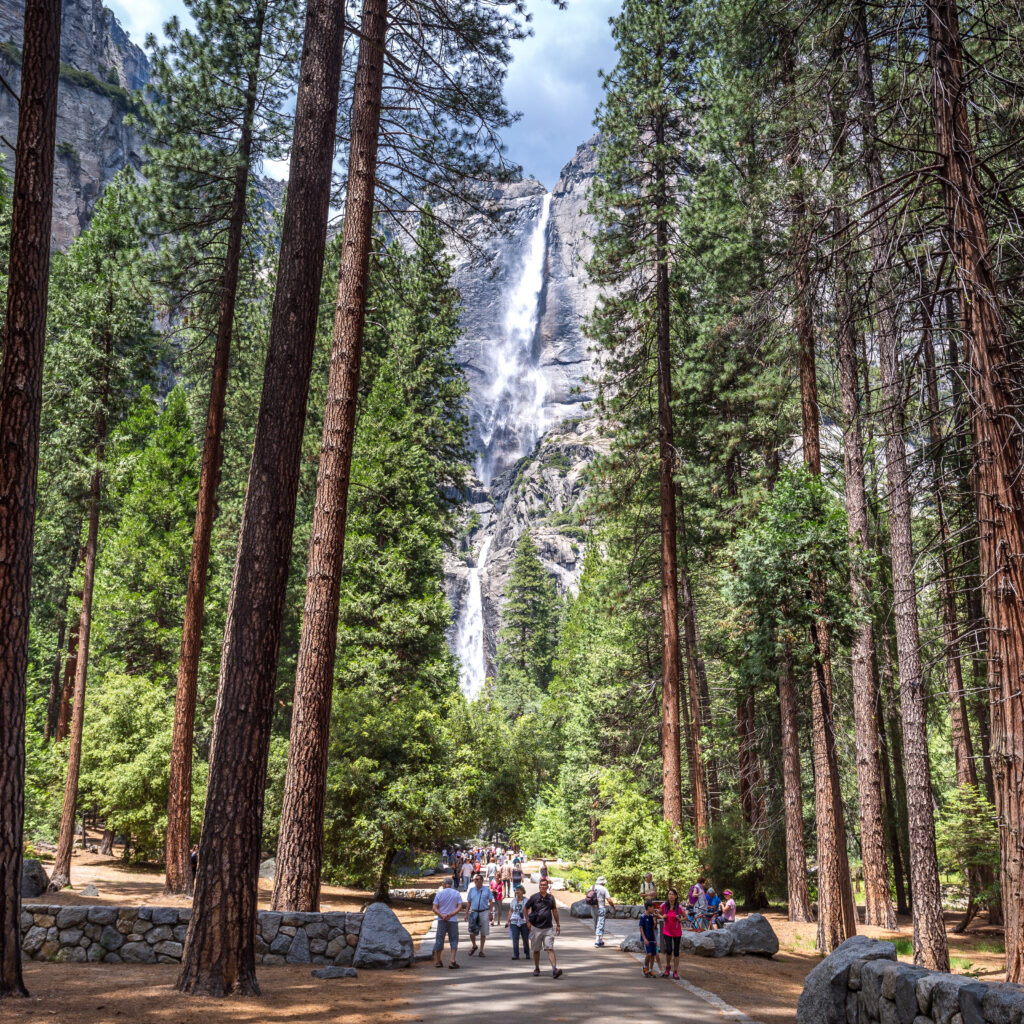
Yosemite Lower Yosemite Falls Trail (Kim Carroll)

Lower Yosemite Falls Trail 

  • Distance of Trail: 1 mile round trip
  • Elevation Gain of Trail: 50 feet / 15 meters
  • Crowd Level of Trail: high 
  • Time to hike the Trail: 30 minutes – 1 hour

Yosemite Falls stands over 2,400 feet tall, the highest waterfall in North America and the 5th tallest in the world. The trail to the Lower Yosemite Falls is one of the most iconic in the park, and with a fully paved path, it is accessible for all. May through July is the best time of year to complete this day hike to see the waterfall flowing to its fullest. 

Sentinel / Cook’s Meadow Loop

  • Distance of Trail: 2.25 miles round trip
  • Elevation Gain of Trail: none
  • Crowd Level of Trail: high 
  • Time to hike the Trail: 1 – 2 hours

This trail is also extremely popular, but it will give you a chance to soak up more of the beautiful landmarks and views you may have missed on your drive into the Valley. Within the Valley, there are numerous entry points to this trail. You can hop on or off the trail at any of the landmarks along the way including Sentinel Bridge, Yosemite Chapel, The Swinging Bridge, the trailhead of the Lower Yosemite Falls and Cook’s Meadow. This trail is part of the much longer Valley Trail Loop, which circles completely around the Valley. 

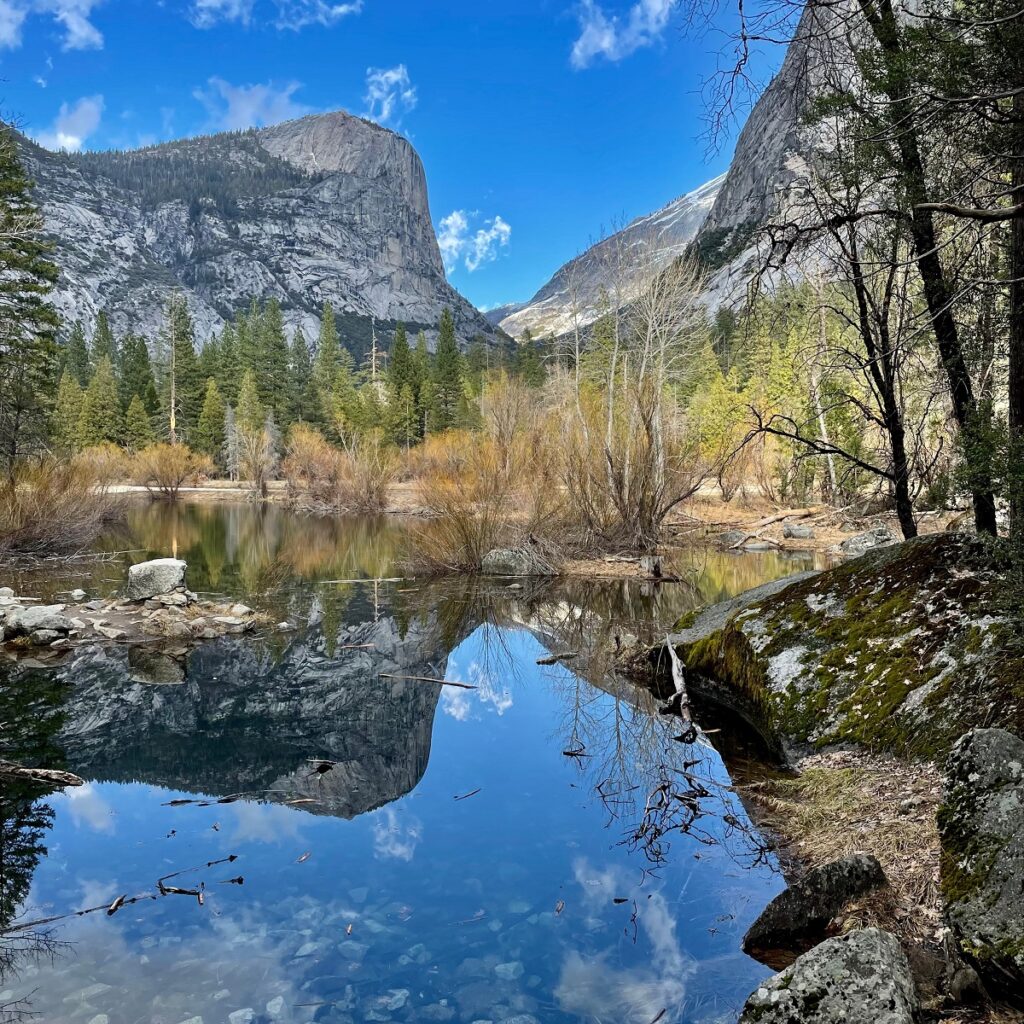
Mirror Lake (Jonah C)

Mirror Lake Loop

  • Distance of Trail: 2.4 – 4 miles round trip 
  • Elevation Gain of Trail: 100 feet / 30 meters
  • Crowd Level of Trail: high 
  • Time to hike the Trail: 1 – 3 hours

Mirror Lake is a hot spot for swimming during the summer months in Yosemite, but beyond swimming, this trail boasts beautiful views of the face of Half Dome. It also is the prime location for some amazing photography. Just wait until you see the reflections of the Valley in the lake! By simply hiking the trail from the trailhead to Mirror Lake and back, the route is about 2.4 miles. To complete the loop past Mirror Lake and around Tenaya Canyon, the trail is 4 miles round trip. 

Moderate Day Hikes In Yosemite Valley

Once you have warmed up your hiking legs and are ready for the next adventure, it’s time to try one of the moderate day hikes found in Yosemite Valley. Not only does the length of these trails increase in difficulty, but the elevation changes are much larger than our list of easy day hikes. Here are our favorite moderate day hikes in Yosemite Valley:

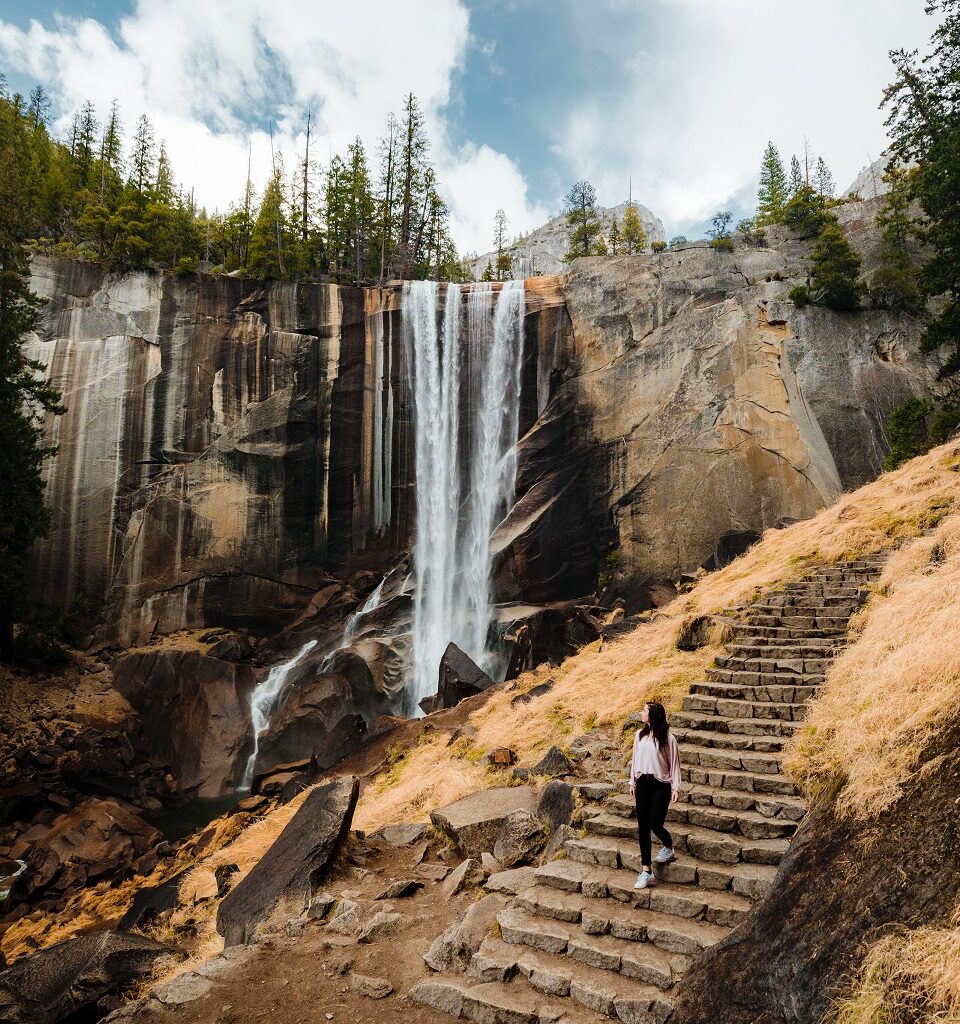
Vernal Fall Ryan Resatka

Mist Trail 

  • Distance of Trail: 3 – 7 miles round trip
  • Elevation Gain of Trail: 1,000 – 1,900 feet / 300 – 580 meters
  • Crowd Level of Trail: medium – high
  • Time to hike the Trail: 2 – 5 hours

The Mist Trail is known for its many views and multiple vantage points of Half Dome, Liberty Cap and two waterfalls. This trail is also popular for the intense flow of the waterfalls, particularly Vernal Falls which will leave you soaked through if you visit during spring. 

Again, you have the option to enjoy a shorter or longer hike on the Mist Trail. Starting at the trailhead to Vernal Falls and back is around 3 miles. If you are feeling adventurous, continue to Nevada Fall to complete the full 7-mile trail. If you decide to continue to Nevada Fall, the hike becomes more strenuous, but the views will be worth the workout. There is also the option to take your return trip down the John Muir Trail. This will add an extra mile or so to your adventure, but it will also add even more breathtaking scenery!

Upper Yosemite Falls Trail 

  • Distance of Trail: 7.6 – 9.4 miles round trip
  • Elevation Gain of Trail: 2,600 – 2,969 feet / 790 – 890 meters
  • Crowd Level of Trail: low – high
  • Time to hike the Trail: 6 – 10 hours
Some of the best day hikes in Yosemite give you an incredible view of Yosemite Falls.

Yosemite Falls

Many have called the hike to the Upper Yosemite Falls the ultimate stair-master workout. After the first mile, you will have climbed 1,000 feet in elevation via dozens of switchbacks and reached Columbia Rock. Take a breath and snap a few photos. Once you continue along the trail, you will climb another set of steep switchbacks before reaching the top of the falls. From the top of Yosemite Falls, you will gaze upon the Valley below and surrounding granite cliffs. 

Once you have made it this far, you have the option to climb a little further to reach Yosemite Point. This stretch will add less than 2 miles total to your hike but will give you a chance to snag some incredible photographs. This point boasts the best views of Half Dome and some of the most beautiful in the park. 

Strenuous Day Hikes In Yosemite Valley

For the extreme sports enthusiasts, Yosemite Valley offers a few of the best strenuous hikes in the park for you to enjoy. Most of these trails will take almost the entire day to complete. Pack your bags and get ready for a strenuous day hike in Yosemite Valley. 

Snow Creek Trail

  • Distance of Trail: 7.2 miles round trip
  • Elevation Gain of Trail: 2,700 feet / 820 meters
  • Crowd Level of Trail: low – medium
  • Time to hike the Trail: 6 – 7 hours

What makes Snow Creek Trail stand out among the rest is its intensely steep and short trek from the Valley floor to the rim. The intense switchbacks on Snow Creek Trail take you from bottom to top in 1.7 miles. For comparison, the Upper Yosemite Falls Trails stretches 3.2 miles to make this climb, and the Four Mile Trail takes 4.7 miles to cover the same elevation increase. 

The trail starts easy and crowded as you make your way down Mirror Lake Loop. Past Mirror Lake at the far end of Tenaya Canyon, you will find the Snow Creek Trail junction. From here, it’s straight up to the top with fewer crowds and a much more intense hike. 

This trail is also accessible via Tioga Road. Taking this route you will add about 3 miles to your total hike, but the hike is far more moderate. On this route, you will descend to Snow Creek versus climbing up, and the elevation change is stretched across 5 miles versus Snow Creek Trail’s 1.7-miles. 

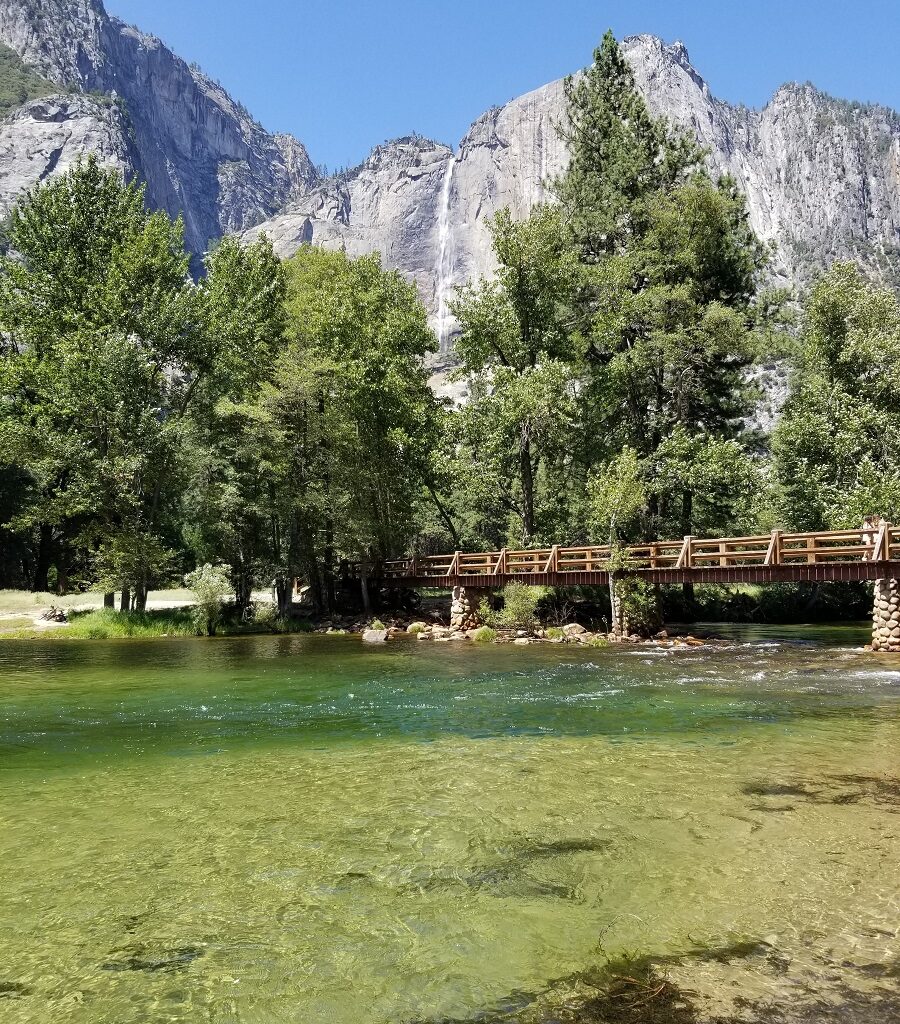
Swinging Bridge in Yosemite National Park.

Four Mile Trail 

  • Distance of Trail: 9.4 miles round trip
  • Elevation Gain of Trail: 3,200 feet / 975 meters
  • Crowd Level of Trail: medium
  • Time to hike the Trail: 5 – 10 hours

From the Swinging Bridge in the Valley to the top of Glacier Point, Four Mile Trail gives hikers some of the best views of Yosemite Falls from top to bottom. Also, this is one of the few trails in the park that has vehicle access at both ends. If you have the vehicles to arrange a “personal” shuttle, you could hike this trail one way cutting your distance and time in half. 

If you choose to make the full hike up and back, you have the option to take an alternate route back down to the Valley via the Panorama Trail. Combining these two trails gives you added views of the Illilouette, Nevada and Vernal Falls, added elevation of around 800 feet and almost 5 additional miles. Consider that the trailheads for these hikes are about 3 miles apart. Once again, the views you will gain can make all those added miles worth it. 

Half Dome hike at Yosemite National Park.

Half Dome Trail 

  • Distance of Trail: 14.2 – 23 miles round trip
  • Elevation Gain of Trail: 4,800 feet / 1,600 meters
  • Crowd Level of Trail: high (limited)
  • Time to hike the Trail: 10 – 14 hours

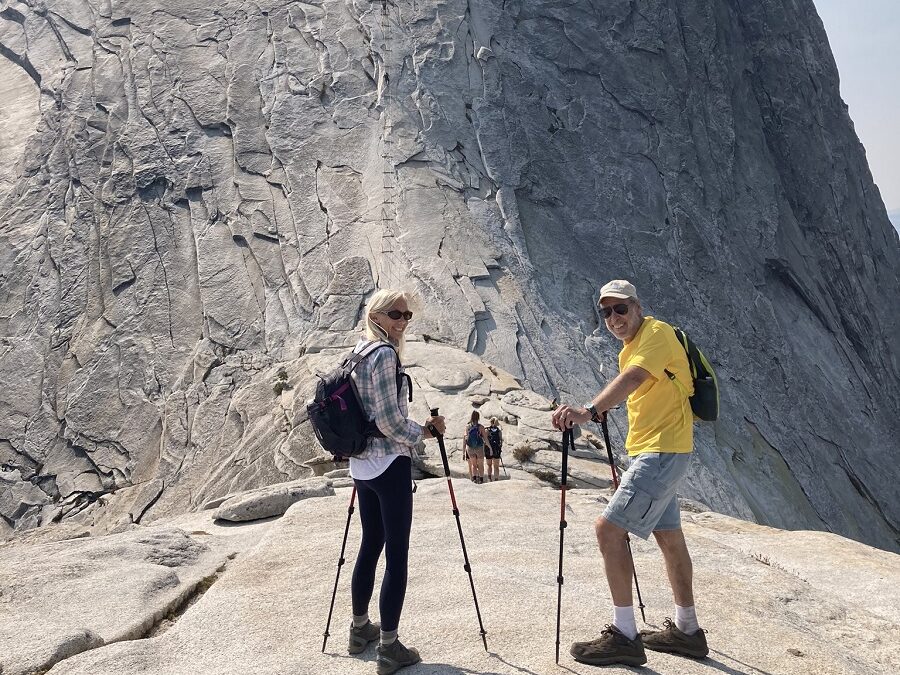
We saved the best for last. This all-day hike provides some of the best views within the park, but it also is one of the most dangerous trails. The trail is only open from around Memorial Day in May to Columbus Day in October; they remove the climbing cables during all other times of the year. 

There are two important things to know about Half Dome. First, a permit is required to climb the last 400 feet up the backside of Half Dome using the cable route. (Anyone may make the hike as far as the subdome.) Permits for Half Dome day hikers are distributed via a lottery system. Applications open at the end of March for the following season. If you are not chosen during this initial lottery, you do a chance to receive a day hike permit by submitting an application two days before you plan to hike. 

The cable route to the top of Half Dome can seem intimidating but it is one of the best day hikes in Yosemite.

Cable Route at Half Dome

There are 225 day-hike permits distributed for each day of the week, and the remaining 75 permits are reserved for backpackers who plan on spending the night at the Little Yosemite Valley campground before their Half Dome hike. (Those who receive backpacker permits for Half Dome are still required to apply for a wilderness permit for an overnight adventure within the Park.)

Second, be sure to plan ahead and prepare for what you might need while on your Yosemite day hike, especially for the Half Dome Trail. For example, waterproof hiking boots are needed no matter which trail you choose to hike. For the Half Dome Trail, you will also need to bring nitrile-coated gloves for climbing the cables. It is best to pack for all possible situations rather than finding yourself missing an important item in an emergency. 

You have the option of several trails to access Half Dome, a few that we have already discussed. First, you could take the Mist Trail past the Vernal and Nevada Falls, jump onto the John Muir Trail at the junction and continue to the Half Dome Trail. This route is the shortest trail at 14.2 miles. 

You could also take the John Muir Trail the entire way from Vernal Falls Bridge, past Clark Point to the Half Dome Trail. This route is around 16.5 miles. There is also a route via the Panorama Trail from Glacier Point that stretches around 20 miles, or the route from Tenaya Lake is the longest totaling around 23 miles. No matter which route you choose, if you are one of the honored individuals to receive a Half Dome hiking permit, you are in for a true adventure. 

If the thought of tackling any of these hikes alone seems intimidating, allow our knowledgeable guides to assist. Rush Creek Lodge and Evergreen Lodge offer guided hikes for many trails in Yosemite no matter what your experience level. All the pricing for our guided hikes includes your park entry fee, and you will not be required to obtain a day-use reservation pass. 

We hope this list of the best day hikes in Yosemite Valley has increased your excitement for your next Yosemite adventure. Rush Creek Lodge , Evergreen Lodge, and Firefall Ranch welcome the opportunity to accommodate you and your family during your next vacation. We have a variety of on-site amenities, world-class dining options and a prime location for easy access to Yosemite National Park.

What To Bring On A Day Hike In Yosemite

Spring has sprung, and Yosemite’s prime hiking season is quickly approaching. Every year around April 15th, the plowing crews at Yosemite begin removing the snow and ice from Tioga Road and Glacier Point Road. This time of year signals that the snow from the previous winter is melting, and Yosemite’s waterfalls will soon flow strong.

As you begin planning for your upcoming Yosemite vacation, allow us to help you prepare. Hiking will surely be one item on your busy itinerary. Whether you plan on hiking one of the shorter, easier trails like the half-mile Lower Yosemite Falls Trail or this is the year you plan to hike all seven and a half miles to the top of Yosemite Falls, many of your hiking essentials will be the same. Here is our comprehensive list of what to bring on a day hike in Yosemite.

Clothing and Footwear For Your Yosemite Day Hike

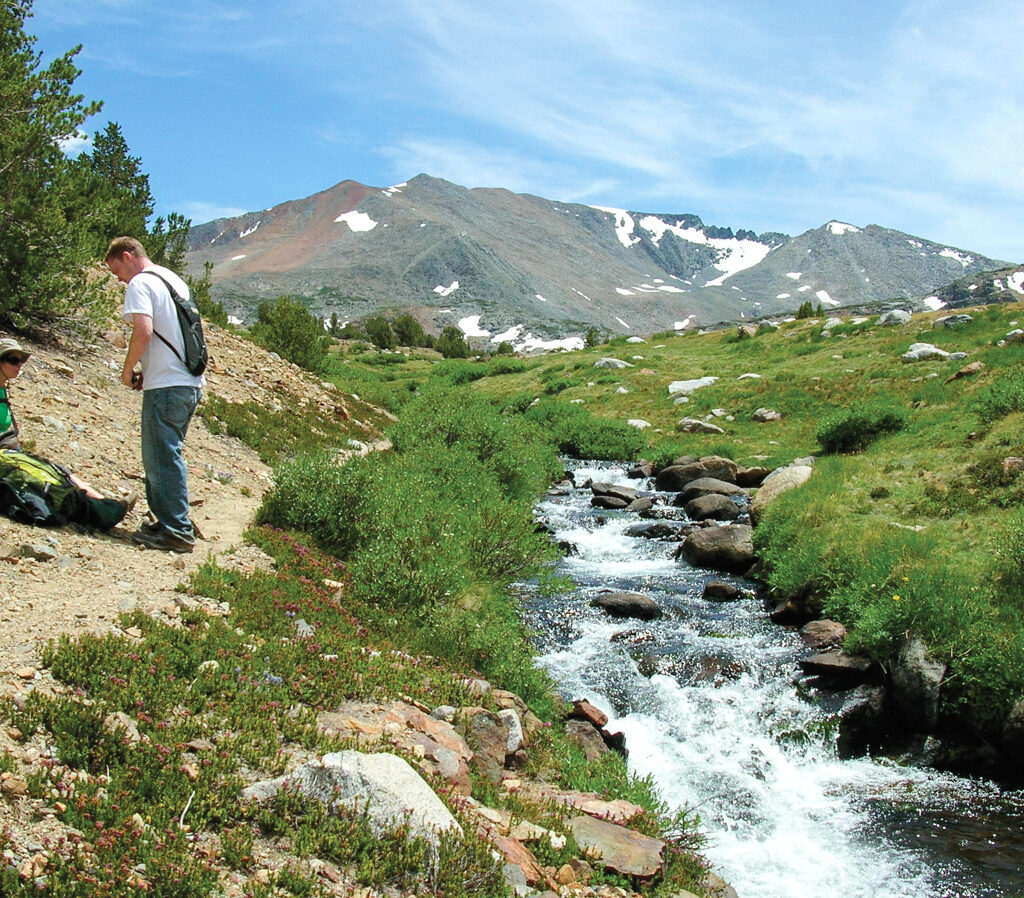
1| Waterproof Hiking ShoesMono Pass Naturalist Hike

Even if you don’t plan on hiking across any streams or rivers, waterproof hiking shoes are a great comfort in Yosemite. As we have mentioned, springtime signals the melting of snow and this causes many trails in Yosemite to have patches of water and ice. Especially around the waterfalls, Yosemite trails will have standing water and slippery areas. To be prepared for all occasions, it’s best to invest in a reliable pair of waterproof hiking shoes.

If you plan on hiking during the winter, you will want to invest in a pair of winter hiking boots. These will not only provide protection from the wet snow but also ensure you have a firm footing on any icy patches you may encounter. Whichever pair of boots you select, we recommend taking time to break them in before your vacation. There’s nothing worse than new-shoe blisters on a hike.  Toss some moleskins in your backpack just in case you do blister.

Also, don’t forget to pack and wear a pair of breathable socks. Ensure that your socks are long enough to protect your lower leg from your boots. It can also be helpful to pack an extra pair of socks on your hike. A fresh pair of dry socks can make a big difference on your hike back.

2| Light Layers

With the extreme elevation changes around Yosemite National Park, the temperatures can also drastically change from the start of your hike to the end of your hike and in-between. No matter which season you are planning to visit Yosemite, layers will be important.

During the spring, summer, or fall, we recommend wearing a base of shorts and a tank top or t-shirt then layering from there. Cargo pants that have removable sections are great. You can start the day with long pants and simply unzip a section as the temperatures warm. They also have great pockets for storage on your day hike.

Next, add a lightweight long sleeve shirt for sun protection and warmth. Finish your outfit with a lightweight jacket. Water-resistant materials work best for protection from a waterfall’s spray or mist.

If you are visiting Yosemite during the late fall, early spring or winter months, plan on wearing thicker layers. Wool or fleece undergarments are great for your base layer to ensure you stay warm in snowy conditions. You will also need a pair of warm gloves and thicker socks during the winter months.

For all seasons, we recommend wearing sports fabrics over cotton or jean material for their breathability and quick-drying properties. Finally, we also recommend packing a lightweight poncho in your bag. Beautiful light afternoon showers are common throughout the Sierra Nevada, and a poncho is easily pulled over your person and your backpack to keep everything dry. They are also small and compact, so they won’t take up much room in your bag.

3| Head Protection

As you are packing for your day hike in Yosemite don’t forget to bring head protection. Sunglasses are great for the sunlight you will see reflecting off of Yosemite’s waterfalls. They also work great for the trails as you weave in and out of cover. Sunglasses will be essential during the winter for protection against the reflecting sun.

We also recommend bringing a hat. A baseball cap, wide-brimmed sun hat or lightweight bucket hat will work well. Nothing is worse than having a sunburn on your scalp. Consider a beanie or wool cap for hiking during the winter.

Essential Gear For Your Yosemite Day Hike

1| Water

No matter how long of a hike you are planning, never hike without water, even if the trail is short with little elevation change. We recommend having at least 32 oz of water per adult. For longer trails, you will want to increase this amount. Yosemite recommends drinking at least one quart of water every couple of hours while hiking.

Most experts recommend you drink three liters of water if you are planning on an all-day hike. Consider bringing a hydration reservoir pack. These bags fit easily into your backpack, hold more water at once and allow for sipping on the move. There are also many water bottles that have built-in filters for refilling on the go. Keep in mind that if you are hiking during the fall or winter, most of the waterfalls and small streams will have dried up.

It is a good practice to drink extra water the day before you are planning a long hike. Pre-hydration will make your Yosemite day hike much more enjoyable.

2| Sunscreen and Bug Spray

These are two very important items to bring on a day hike in Yosemite. Sunscreen is essential for protecting your skin any time of year. Remember to reapply throughout the day. Bug spray is a must-have during the summer months in Yosemite as mosquitos are prevalent in the area. We recommend not only spraying your person but also giving your hat/head, boots and backpack a quick spray as well.

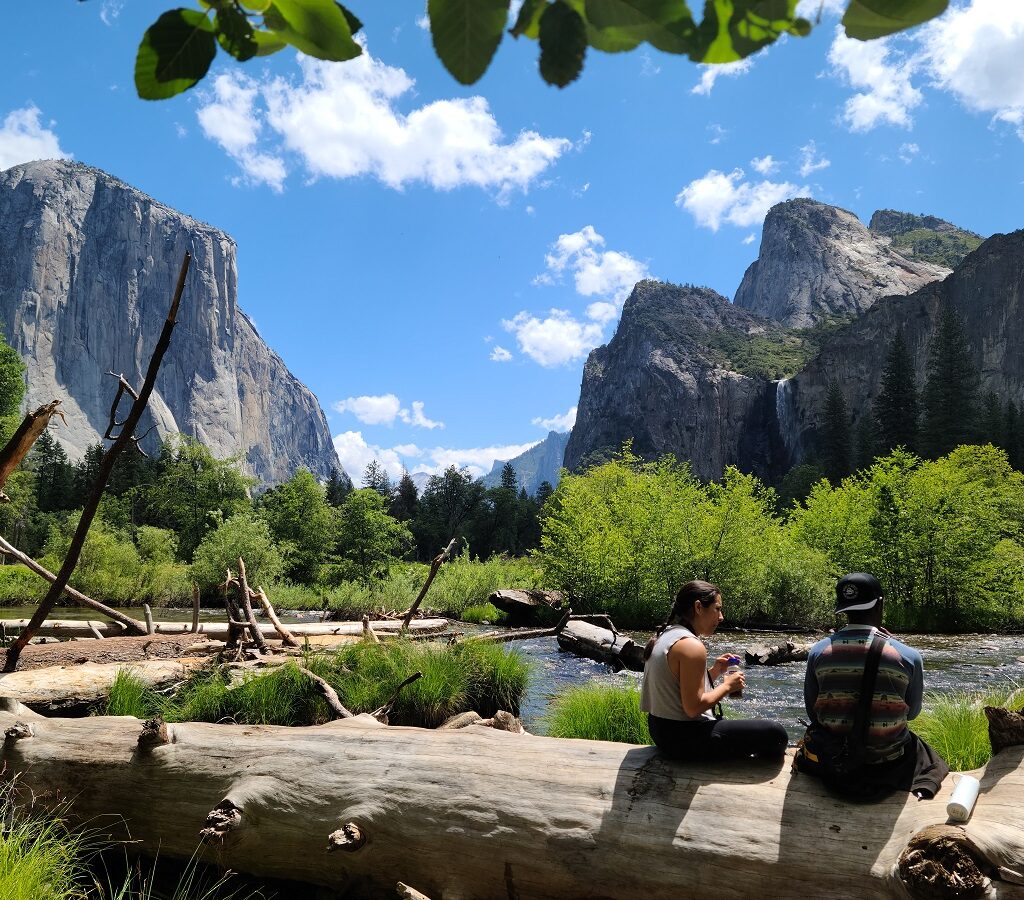
3| SnacksValley View (Santino T)

Just like with water, snacks are essential when packing for your day hike in Yosemite. Even if you eat a full breakfast before heading out, hunger could strike quicker than you would expect with all the extra energy you are exerting on the trails.

Try to bring items that will travel well no matter what the temperature may become. Beef jerky, trail mix, granola bars, and dried fruit all make great trail snacks. Depending on the length of your hike, you might pack a whole lunch, just be aware of the temperatures. If you plan on packing sandwiches, you could use hummus or mustard instead of mayonnaise.

Don’t forget to bring all of your trash back with you. This means wrappers and food scraps. Yosemite warns its visitors not to feed any of the wildlife or leave their food scraps around the park. The wildlife has plenty of natural food to eat, and human food is harmful to wild animals.

4| Park and Trails Maps

Electronic maps and GPS are wonderful inventions, but Yosemite National Park is over 1,200 square miles – bigger than the State of Rhode Island! Reception and Wi-Fi are not available everywhere. For your safety, pick up a park map and trails guide at the Visitor Center in Yosemite Valley, at a local general store or other local outfitter. These maps will also come in handy when deciding which trails you will choose to hike as they also show the elevation changes on the trails. A compass is also helpful to have for navigating through the park and down longer trails.

5| Backpack or Day PackFall at Firefall Ranch (Kim Carroll Photography)

The best way to carry all the items you will need during your Yosemite day hike is a backpack or day pack. We recommend finding a pack with lots of storage compartments on the inside and outside to help you keep items organized for easy access.

Emergency Gear For Your Yosemite Day Hike

You may only plan on taking a day hike to the top of the falls and back, but it is best to prepare for emergencies just in case. We recommend making room for these items in your pack before any optional gear.

1| First Aid Kit: Prepackaged kits work great as they will have many important first aid items in one convenient pouch. Check to be sure that your kit has a knife or multi-tool inside plus matches or a firestarter.

2| Headlamp: This item is essential in case of any late returns to your vehicle, planned or unplanned. You may decide to stick around and watch a Yosemite sunset once you are out on the trails.

3| Whistle and/or Signal Mirror: Whistles work great for contacting distant hikers. If you get separated from your group, a signal mirror reflection can be seen from far away. Both items will help you reconnect with your group easily.

4| Restroom Essentials: Always have a small supply of bathroom tissue, a few ziplock bags, and hand sanitizer. All of Yosemite’s trailheads and most of their waterfall lookout points will have on-site restrooms, but sometimes nature calls between these locations. Remember, Yosemite has a strict Leave No Trace rule. Have your ziplock bag handy to store your used tissue until you reach a trash can.  As the locals say, “if you pack it in, pack it out.”

Optional Gear For Your Yosemite Day Hike

  • Binoculars – for bird watching, wildlife encounters (from a safe distance), and to watch rock climbers
  • Water shoes and a swimsuit – for taking a dip in any streams, lakes, or rivers
  • Star chart or app – for better stargazing
  • Table cloth or small blanket – for an afternoon picnic
  • Camera or GoPro – for capturing the amazing views in Yosemite
  • Trekking or hiking poles – for longer hikes or hikes with steeper elevations
  • Climbing gloves (nitrile coated) – for gripping climbing cables
  • Portable power supply – for recharging devices

Tips For Your Yosemite Day Hike

  1. Check with a Park Ranger before heading out on your hike to find out about any trail closures and the current trail conditions.
  2. For taking pictures near waterfalls, consider bringing a waterproof camera or waterproof container for your phone.
  3. Don’t bring bear repellant. Yosemite National Park has it on their prohibited items list.
  4. Do not store anything with a scent in your car or trunk – use the bear lockers provided in parking lots and at trail heads. Yosemite Park Rangers urge visitors to be aware of any food, sprays, or deodorants they may have stored in their car. Items as simple as chewing gum and food crumbs in child car seats have attracted curious black bears. We strongly recommend not keeping any items with strong scents in your car overnight or during a day hike.
  5. Do not use any liquid detergents or soaps in the streams, lakes, or rivers in Yosemite National Park. The foaming agent in these products is harmful to wildlife.
  6. We don’t recommend hiking alone, but if you are, be sure to leave a note at your hotel of which trail you will be hiking and let a friend or family member know where you will be and what time you expect to return.
  7. Follow instructions on all safety signs posted on trails. Yosemite is a natural wilderness environment, not to be mistaken for a controlled theme park environment.
  8. Yosemite National Park has more hiking tips and safety regulations online.  Be sure to check for latest park conditions and any special requirements for day use access.

We are excited for you and your family to visit Yosemite and enjoy a hike on the many trails throughout the park. Yosemite Hotels has two convenient properties located just outside of Yosemite National Park.

Both of our properties have on-site general stores (for picking up any last-minute hiking supplies), multiple lodging options (depending on your needs), guided tours available (for exploring the park with a local), and Recreation Desks staffed with friendly experts who are happy to provide you with free planning advice and day use rental gear. Find out more about all the amazing amenities we provide at Evergreen Lodge , Rush Creek Lodge, and Firefall Ranch.